
Are Carbon Thru Axles Worth Upgrading? The 2026 Ultimate Guide
Are Carbon Thru Axles Worth Upgrading? The 2026 Ultimate Guide
Conclusion Upfront: Highly Recommended Upgrade. Among all lightweight modifications for complete bicycles, switching to carbon thru axles delivers the best cost-to-performance ratio and the most noticeable improvement in riding performance. A pair of high-quality carbon thru axles can cut 90–120 grams from your bike. The weight savings are comparable to those of premium carbon saddles or carbon seatposts, yet the cost is less than one-tenth that of those components. That said, carbon thru axles are not a blind purchase decision. Incorrect sizing or poorly manufactured units create critical safety risks. This guide provides a comprehensive breakdown of the selection criteria and common pitfalls.
I. Core Understanding: The Fundamental Role of Thru Axles
A thru axle is far more than a simple fastener. It serves as the primary load-bearing interface connecting wheelsets to frames and forks. Forces generated during acceleration and braking, lateral torsion generated during cornering, and shear loads from rough terrain are transmitted through the thru axle. Its rigidity, strength, and stability directly affect wheel seating precision, steering response, and overall riding safety.
II. Cross-Material Comparison: Carbon Fiber Stands Out as the Optimal Choice
1. Weight: Carbon fiber offers a significant weight advantage
Typical measured weight ranges for a pair of mainstream thru axles:
Stock steel axle: 120–160 g
7075 aluminum axle: 60–90 g
Titanium axle: 50–80 g
High-grade carbon axle: 26–40 g
Replacing factory steel axles with carbon variants can reliably reduce weight by roughly 100 grams, making this a low-barrier, high-value lightweight upgrade.
2. Strength: Debunking the myth that carbon fiber is brittle
The risk of sudden cracking seen in outdated low-end carbon products does not apply to modern, well-engineered carbon thru axles, which provide an ample safety margin for general riding:
Tensile strength: >1050 kgf; cannot be broken by human pulling force
Torsion resistance: >25 Nm, far exceeding the standard 8–12 Nm tightening torque used in typical installation
Shear strength: >10,000 N; designed to resist delamination and cracking
Thru axles feature streamlined load paths and simple geometry. Properly laid-up carbon fiber can outperform common metals in mechanical performance, delivering less deflection and greater rigidity.
III. Three Non-Negotiable Selection Parameters – Wrong Specs Lead to Catastrophic Fit Issues
1. Tube Wall Thickness: Balancing safety and lightweight performance
The central shaft section bears primary loads. Standard-compliant wall thickness ranges from 0.8–1.2 mm:
≥1.0 mm: A safe, all-round specification, compatible with all riding conditions; ideal for beginners
0.8 mm: Ultra-lightweight advanced variant. Recommended only from established brands; targeted at weight-conscious enthusiasts
≤0.7 mm: Not recommended. Insufficient safety margin and prone to cracking under intense riding; suitable only for casual road cruising
2. Exact Specification Matching: Three parameters must be verified
No universal carbon thru axle exists. Road and mountain bike standards are non-interchangeable, and specifications differ across brands and model years. Popular sizing standards:
Road disc brake: M12×1.5, M12×1.0
Mountain bike: M12×1.0, M15×1.0
Drive interface: 6 mm / 8 mm hex socket
Always cross-check the manufacturer's official documentation to precisely match the thread pitch, overall axle length, and wrench interface.
3. Fastener Diameter: A hidden trade-off for weight reduction
Many premium ultra-light models adopt smaller-diameter fasteners to cut mass. This is not necessarily corner-cutting, but it can reduce component compatibility. It may cause fit conflicts if you upgrade frames or wheelsets in the future – keep this trade-off in mind before ordering.
IV. 2026 Industry Trend: Thermoset Carbon vs PAEK Thermoplastic Carbon
Thermoset epoxy carbon fiber (T700 / T800) currently dominates the market. It benefits from mature manufacturing processes and competitive pricing, but has limitations in impact resistance, temperature tolerance, and fatigue resistance. New-generation PAEK thermoplastic carbon fiber launched in 2026 addresses these traditional weaknesses and is emerging as the new industry benchmark.
Key Improvements:
| Performance Metric | Conventional Thermoset (Epoxy) Carbon Fiber |
|---|---|
| Overall Strength | Good, performance relies on laminate layup design |
| Impact Resistance | Moderate; prone to brittle fracture without warning under heavy impact |
| Fatigue Resistance | Moderate; susceptible to degradation under repeated long-term loading |
| Temperature Resistance | ~150°C; prone to softening and aging under high temperatures |
| UV Resistance | Poor; relies on surface coating for protection |
| Regulatory Compliance | Downgraded recycling via pyrolysis; high carbon emissions & costs |
| Performance Metric | New Thermoplastic (PAEK) Carbon Fiber |
|---|---|
| Overall Strength | Exceptionally high, with more uniform fiber distribution |
| Impact Resistance | Excellent; ductile failure mode, no sudden catastrophic splitting |
| Fatigue Resistance | Outstanding; ideal for frequent long-distance riding and bumpy terrain |
| Temperature Resistance | Up to 260°C; unaffected by high brake heat |
| UV Resistance | Intrinsically UV-resistant, resists discoloration and aging |
| Regulatory Compliance | Closed-loop solvent recycling; materials can be reused repeatedly |
| Regulatory Compliance | Naturally meets the latest EU environmental compliance standards |
We are launching two PAEK thermoplastic carbon thru axles developed in-house by LTC, premium lightweight upgrade options for 2026 that balance ultra-low weight and maximum durability:
LTC Carbon Fiber Thru Axle 26.5 Entry-level lightweight solution. At 26.5 g per pair, it is among the lightest compliant carbon thru axles commercially available. Built with standard PAEK thermoplastic construction and a precise 0.8 mm wall thickness, engineered to absorb impacts without brittle fracture.
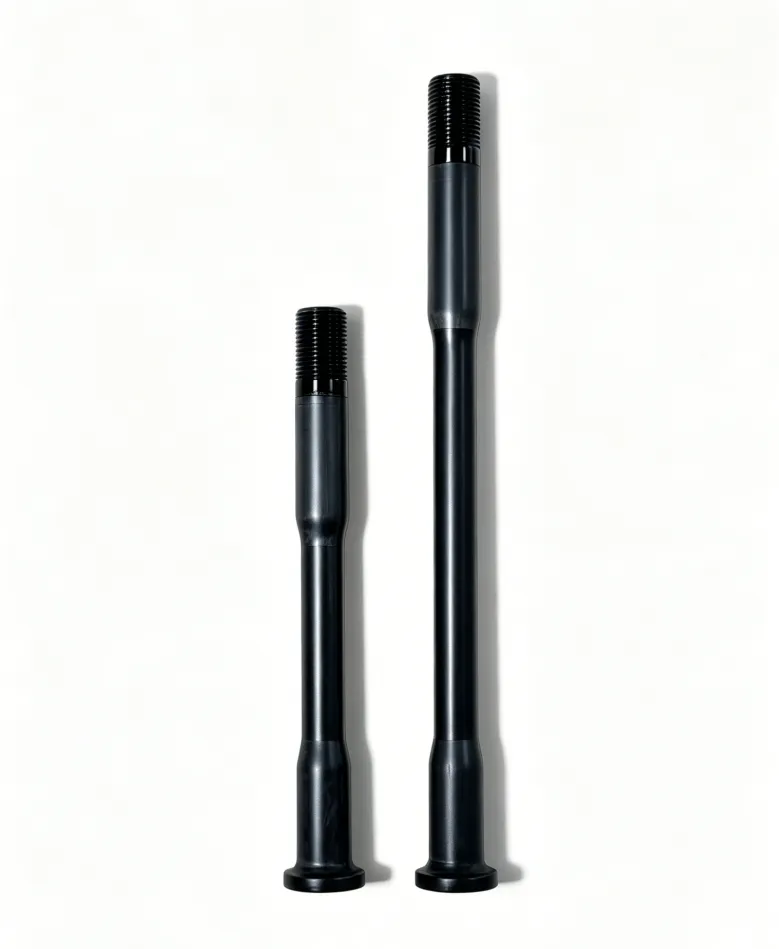
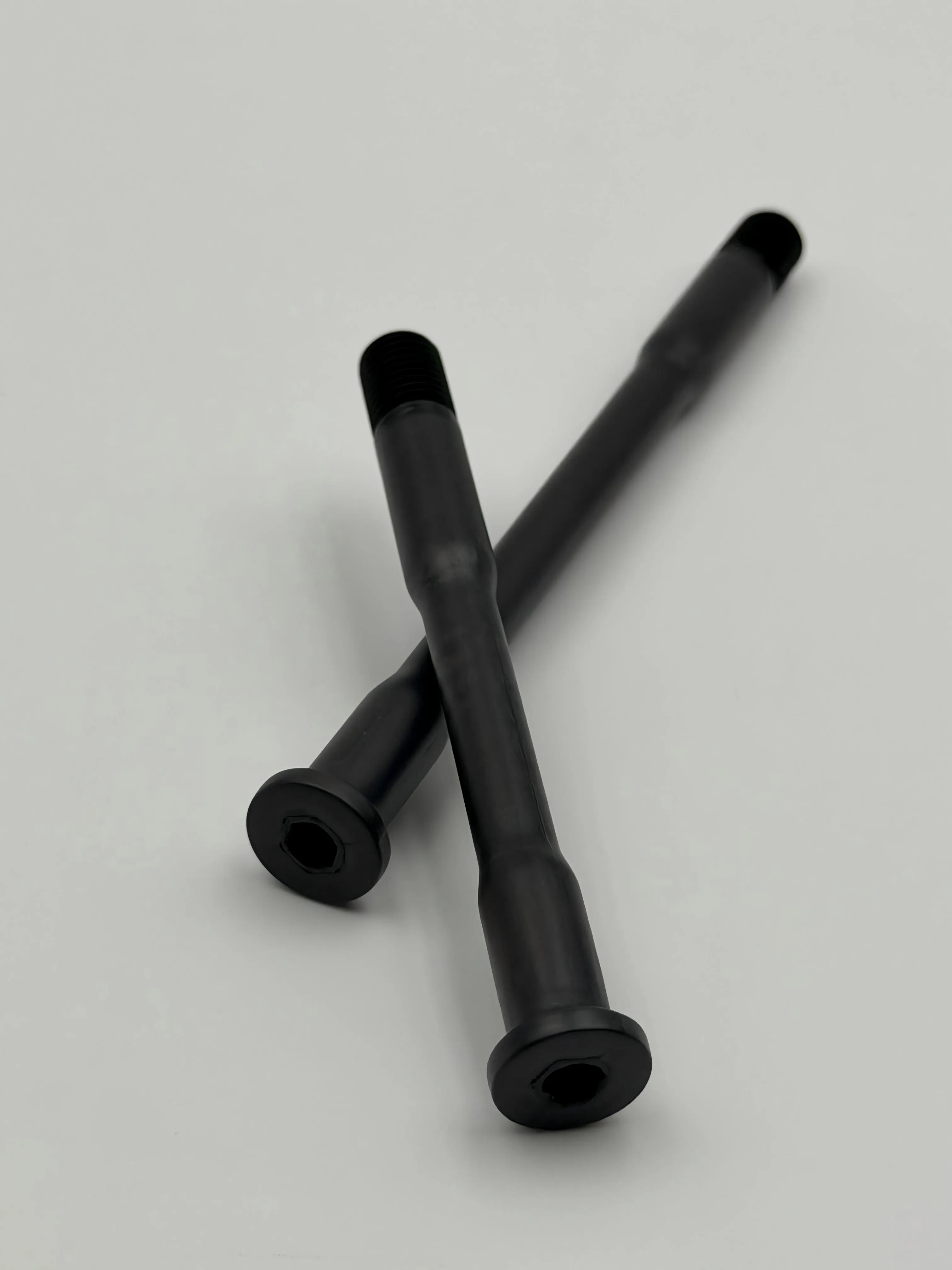
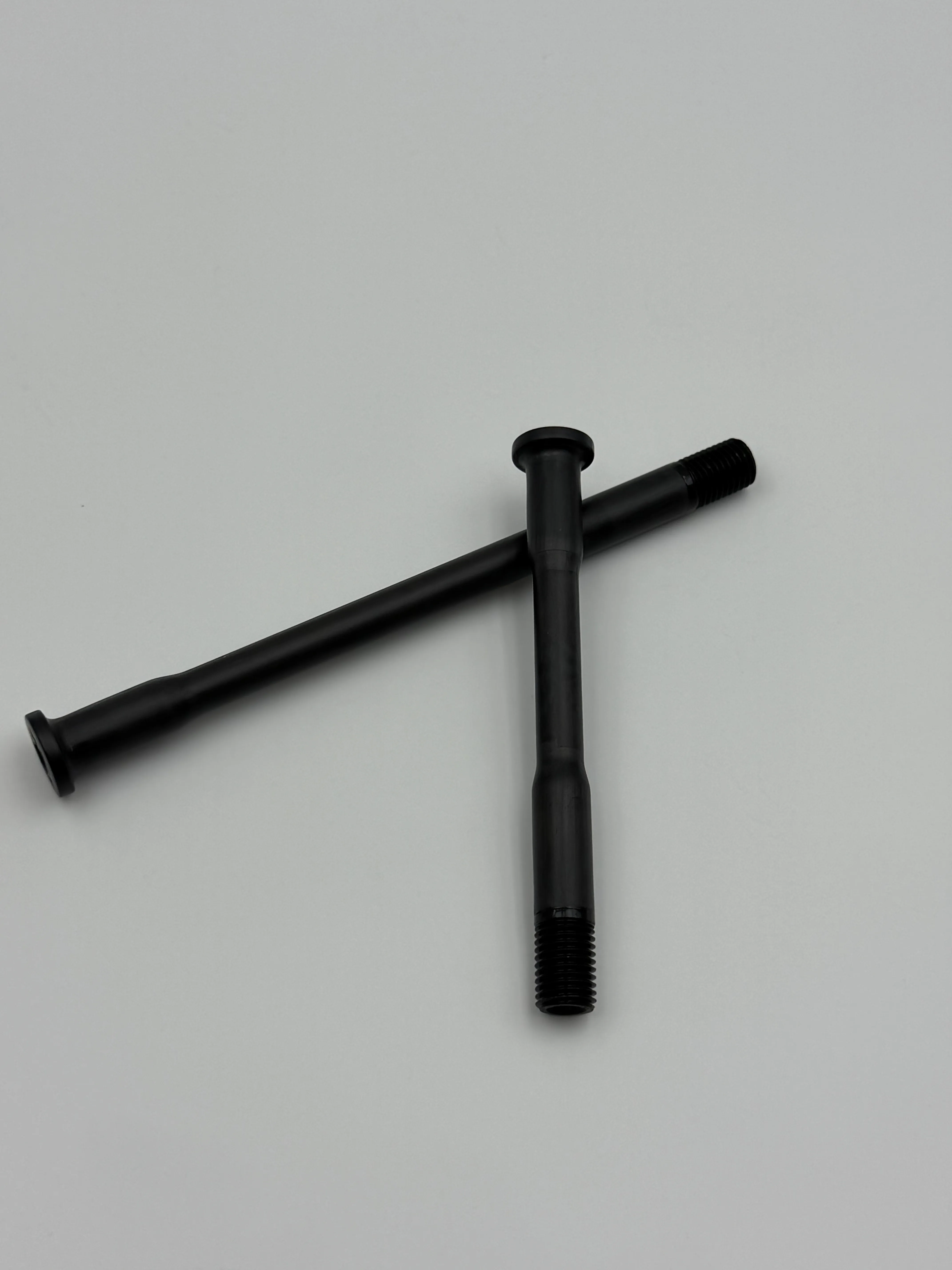 LTC-Carbon-Fiber-Thru-Axle-26
LTC Carbon Fiber Thru Axle 29.5 Advanced heavy-duty variant, weighing 29.5 g per pair. It achieves substantial weight savings while reinforcing structural rigidity, providing a greater safety margin and far greater longevity than conventional thermoset carbon axles.
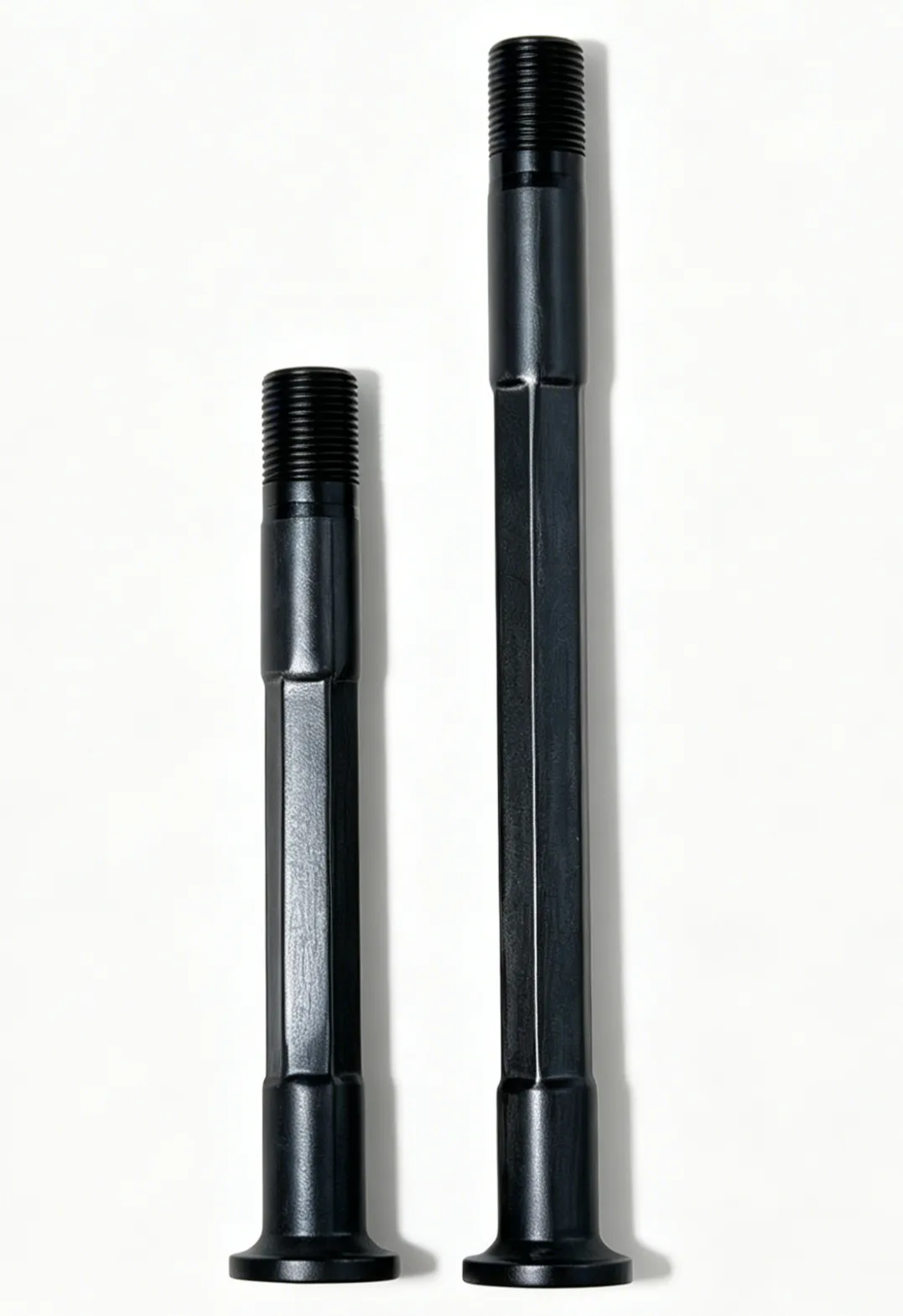
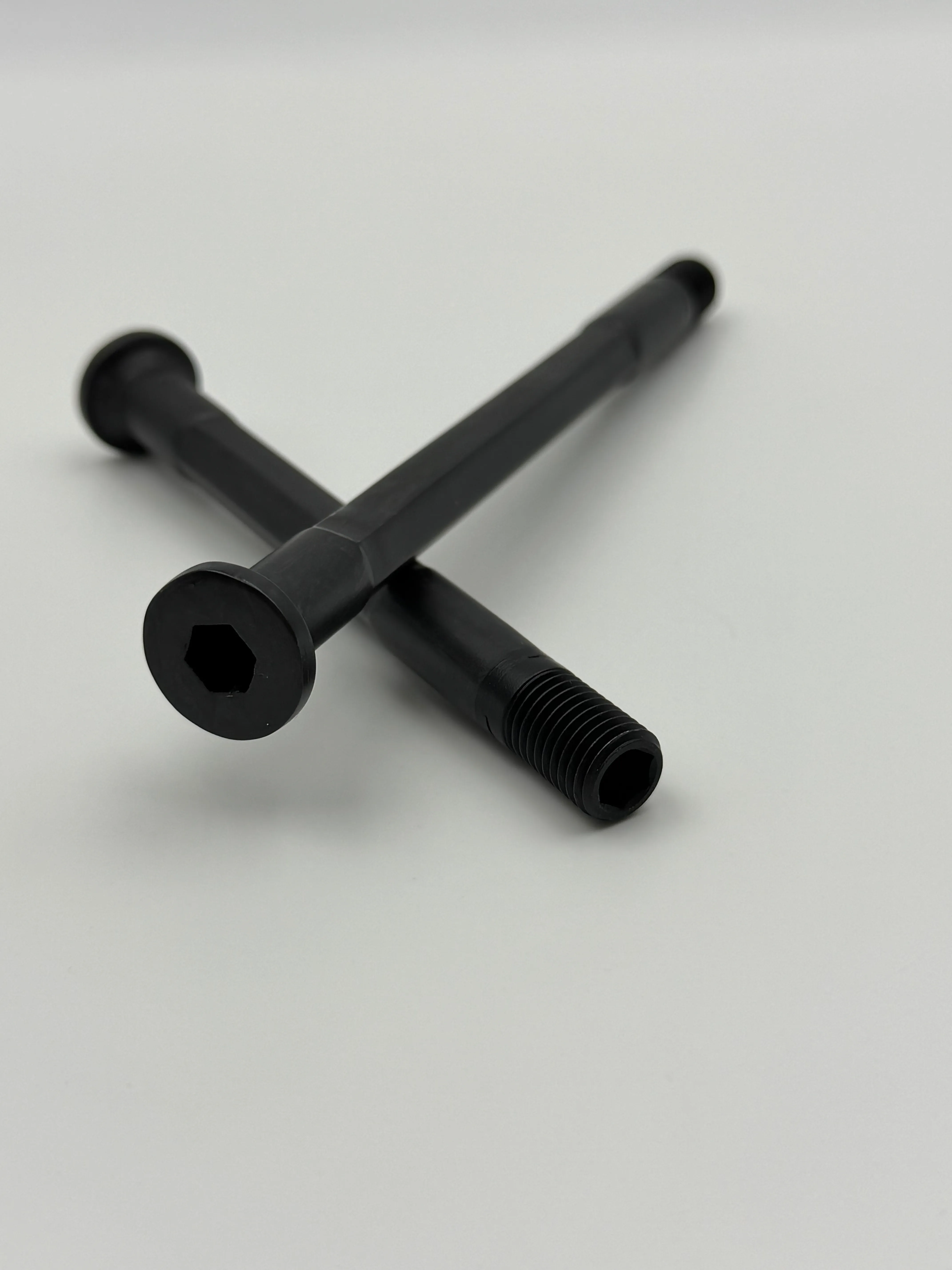
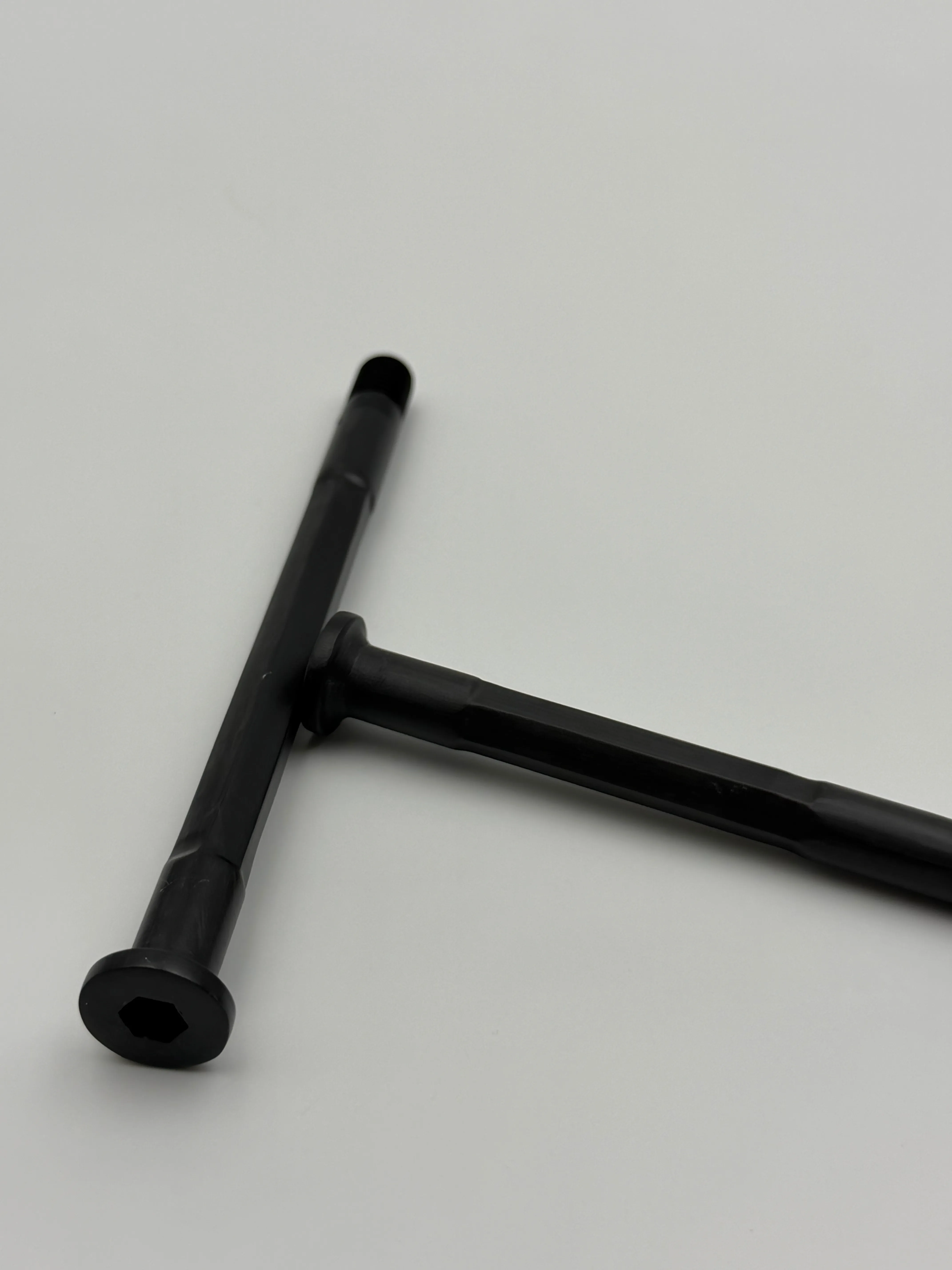 LTC Carbon Fiber Thru Axle 29
I. Golden Rules for Installation & Maintenance – Avoid 90% of Potential Failures
Nearly all carbon thru axle damage arises from improper use. Follow four critical guidelines:
Strict torque control: Tighten to 8–12 Nm maximum. Never exceed 15 Nm to avoid carbon layer crushing.
Apply a thin film of grease. Dry threads can cause thread stripping; excessive grease can contaminate disc rotors and compromise torque accuracy.
Inspect the shaft and interfaces quarterly for looseness, cracks, or peeling of the coating.
Never lift or carry the entire bicycle by gripping the thru axle. Static overload can cause hidden damage to the carbon laminates.
Final Summary: High-Value Lightweight Upgrade, Not a Marketing Gimmick
Engineered, structurally compliant carbon thru axles represent one of the most sensible lightweight modifications for bicycles. They deliver nearly 100 grams of weight savings at a low cost, with sufficient strength and rigidity for commuting, aggressive cornering, and light off-road use.
Compared with spending your budget on high-end, larger components, upgrading your thru axles offers a minimal upfront cost and a strong performance return. It is a preferred modification for riders seeking a refined bike feel on a limited budget.
Related Articles:
· About Carbon Fiber Hubs:
· About Carbon Fiber Spokes:Ultra-light carbon spokes: Ti.C-2.1g, Al.C-3.5g for road/MTB
